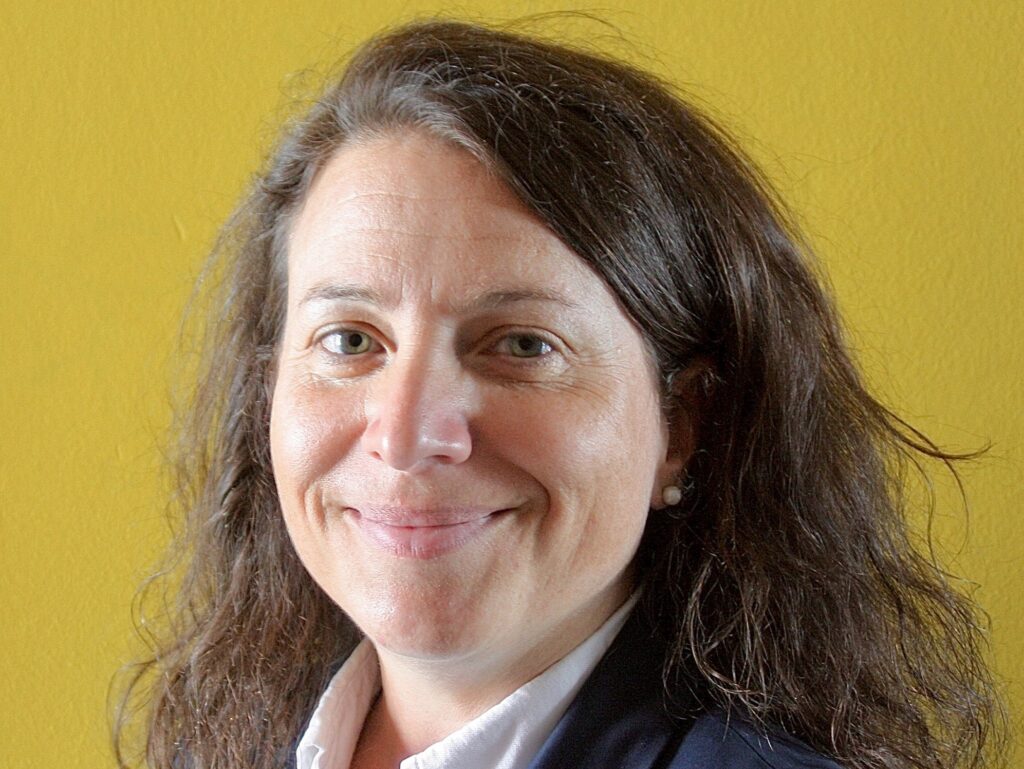
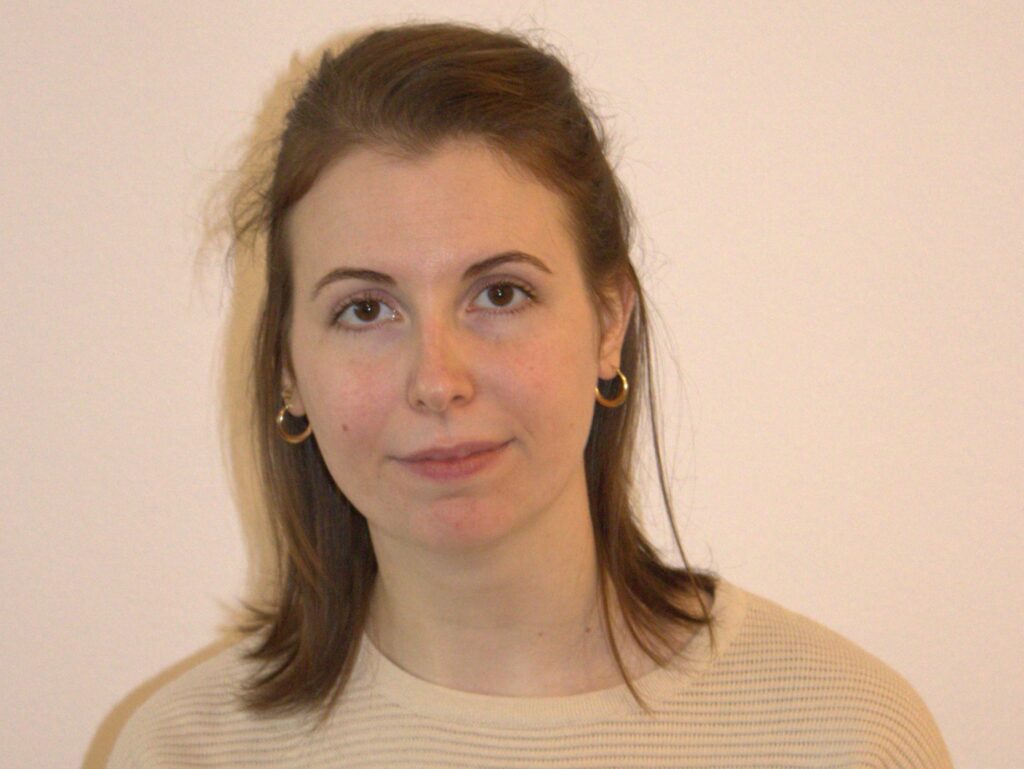
Anna Alabd, M.Ed.
Anna Alabd studied Catholic Religion, History, Social Studies, and Political Education (B.Ed. univ.) at the Paris Lodron University Salzburg and the Catholic Theological Private University Linz (M.Ed.). Since the winter semester of 2020/21, she has been a doctoral student at Paris Lodron University Salzburg in the Department of Religious Studies. She worked for three years as a project manager in interreligious dialogue in the deanery of Traun in Upper Austria. Since January 2021 she has been a member of the doctoral programme PLUS gender_transcultural. In her doctoral thesis, Anna Alabd deals with the autonomy and self-determination of women from Christianity and Islam as a challenge to interreligious ethics.
Dr. Doru Constantin Doroftei
Doru Constantin Dorofteistudied theology and Jewish studies in Sibiu/Hermannstadt (Romania), Graz (Austria), Wuppertal, and Tübingen. In 2013, he completed his doctorate in theology (Dr. Theol.) with a thesis on the biblical book of Joshua and, in 2019 in Jewish studies (Dr. Phil.) with a thesis on the form and genesis of the first bread ritual in rabbinic Judaism and its links to the Christian Eucharist. Between 2015 and 2020, he worked as a Judaist on the ERC project COBHUNI (Contemporary Bioethics and the History of the Unborn in Islam) at the University of Hamburg. In the summer semester of 2019, he held the professorship for Religious Studies and Jewish Studies at the Faculty of Protestant Theology at the University of Tübingen, and from 2020 to 2022, he conducted research on the topic of “Mysticism and Enlightenment” as part of a post-doctoral program at the Hamburg Research Academy. At BaFID, Doru Constantin Doroftei took a cultural and religious studies approach to Judaism in its relationship to Christianity and Islam.


Dr. Ghassan El Masri
Before joining BaFID, Ghassan El Masri was deputy head of the Department of Arabic Studies at the Free University of Berlin. Before that, he headed the DFG research project “From Desolation to Resurrection” at the Berlin-Brandenburg Academy of Sciences and Humanities in Potsdam. His main academic interest is the Koran in its literary and historical contexts on the one hand and its role in Islamic religion and theology on the other. He also specialises in the interplay between politics and theology in modern Arab and Middle Eastern regions.
Héléna Farré, M.A.
Héléna Farré grew up in France and Germany. She studied applied foreign languages and cross-border communication and co-operation in France, Germany and Luxembourg. After spending several months at a cultural centre in Durban, South Africa, she worked at the Franco-German Youth Office (FGYO), where she supervised young volunteers during their stay abroad, and at the Franco-German Cultural Council as a project assistant. At Saarländisches Filmbüro e.V., she was involved in a project to develop an interregional film database and coordinated a cross-border video festival. From 2021 to 2024, in addition to her family life, she worked as a freelance lecturer and lecturer for French and volunteered in various associations. She has been a project assistant at BaFID since June 2024.
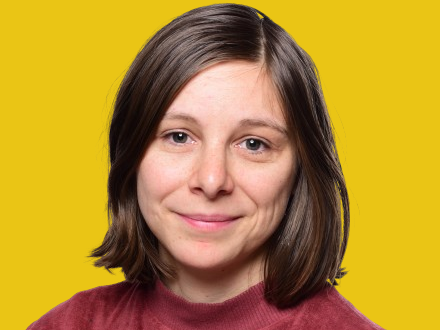
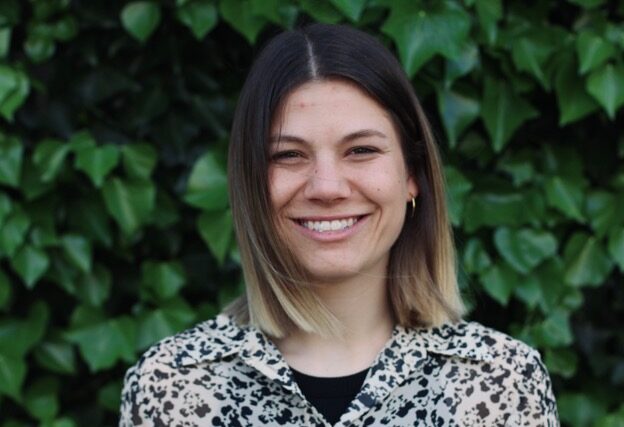
Barbara Halbauer
Barbara Halbauer studied to become a primary school teacher specialising in Protestant theology at the University of Augsburg. Alongside her studies, she worked at the Chair of Protestant Religious Education and Didactics of Religious Education. Since the winter semester of 2021/22, she has been a doctoral candidate at the University of Augsburg in the Department of Protestant Religious Education. Her doctoral thesis deals with the interlinking of interreligious education and education for sustainable development (ESD) in the context of primary school.
Melanie Hallensleben, M.A.
Melanie Hallensleben studied Religious Studies, Gender Studies and Old Testament Studies in Göttingen. After graduating, she worked as a lecturer and coordinator for religious studies in Göttingen and took on teaching assignments at other universities. Her dissertation in Religious Studies in Göttingen is entitled ‘Antisemitism, Philosemitism and Self-Assurance: The Perception of Judaism in New Religious Movements’ (unpublished). As part of her dissertation, she completed a stay abroad in Jerusalem. From 2021 to 2023, she worked as a project coordinator at the Protestant Centre for Worldview Issues for further training. Since December 2023, she has been project coordinator of the #WissenMachtStark project at BaFID, which is funded by the Federal Office for Migration and Refugees.
Sandra Ulrike Hauser, Dipl.-Theol.
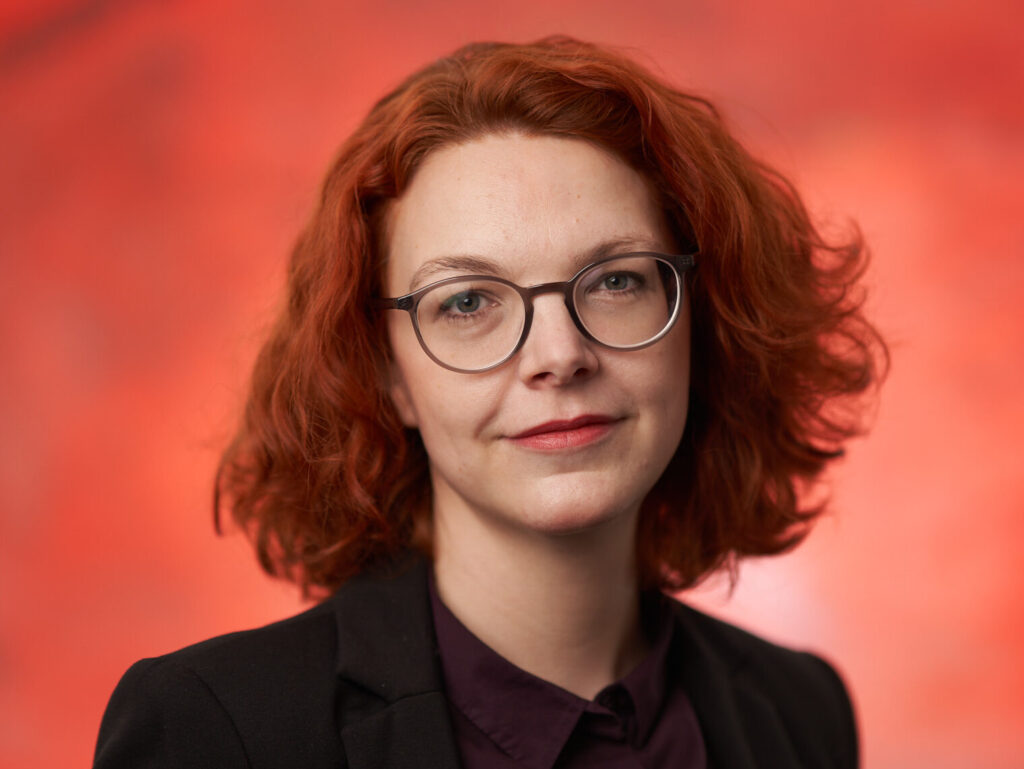
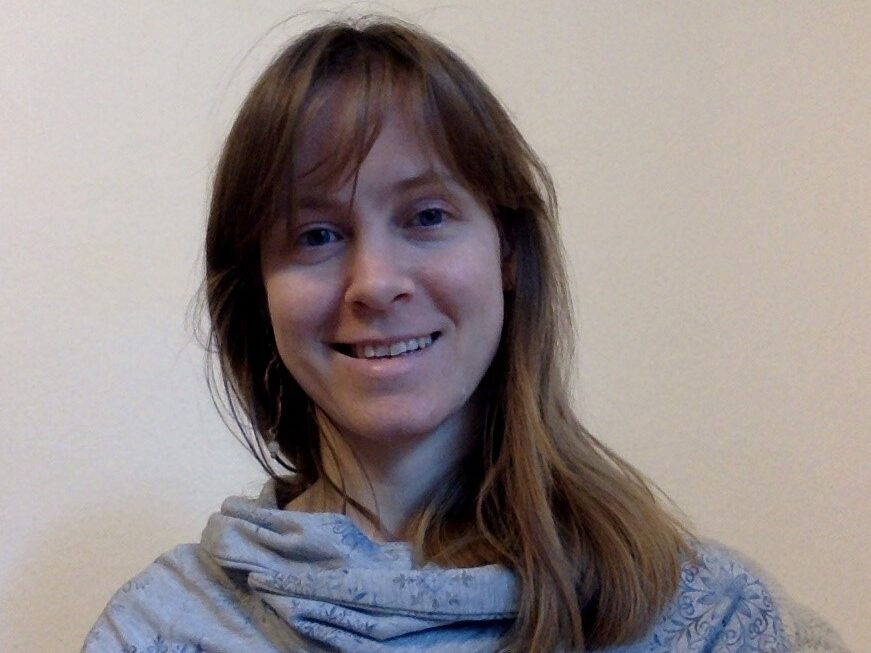
Sandra Ulrike Hauser studied Protestant and Orthodox theology in Tübingen, Minsk (Belarus) and Hamburg, as well as journalism at the FJS in Berlin. From 2012 to 2017, she worked as a pastor at the Württemberg State Church. She wrote her doctoral thesis on “The Reception of Integral Theory(ies) in Christianity.”. Her academic interests include the traditions of mysticism and the application of contemporary meta-theories to Christianity and interreligious discourse. With her expertise, she strengthened the research area on Christianity at BaFID.
Maria Elisabeth Höwer, M.Sc.
Maria Elisabeth Höwer is a doctoral student. She is working on the phenomenon of the “city” in connection with Judaism, Christianity and Islam. Her main subject is anthropogeography, with an intensive reference to (religious) philosophy. As part of her Master’s thesis, she researched the topic of “Postmodern urban development as a perspective on social change”. She studied at the Westfälische-Wilhelms-Universität Münster, the Université Panthéon-Sorbonne (Paris I) and the Technische Universität Dresden. In addition to geography, she studied philosophy, political science, water management and Arabic. The question of the city under the auspices of divine revelation in Judaism, Christianity and Islam addressed a twofold issue: the culture surrounding revelation in the earthly city, as well as the completion of the earthly in the city of God. In the words of the Psalm: “How I rejoiced when I was told: ‘We are going on pilgrimage to the house of the Eternal’!” (Ps 122)

Dr. Naghmeh Jahan
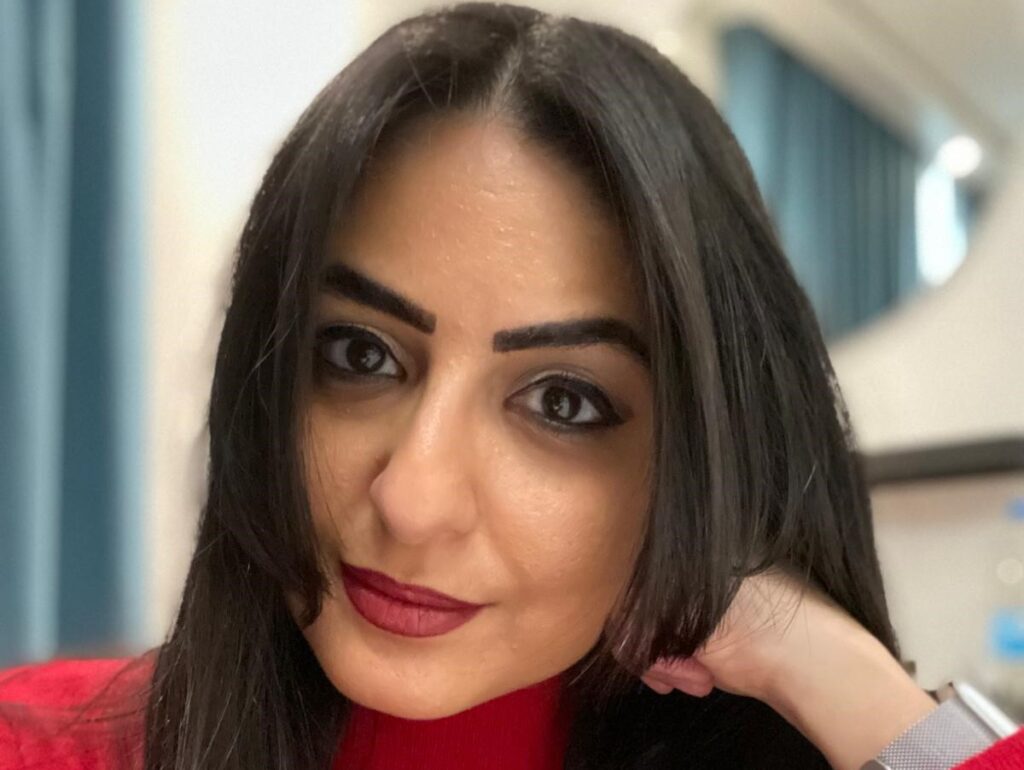
Naghmeh Jahan was born and raised in Iran. Before arriving in Germany in 2004, she lived in Turkey for about seven years. She studied “Theology and Mission Studies” (B.A.) in Hermannsburg and “Religious Studies” (M.A.) and “Protestant Theology” (Diploma) in Göttingen. In 2020, she received her doctorate in “Religious Studies” in Jena. In the same year, she began her habilitation in Jena and worked as a research assistant (postdoc) and lecturer at the Catholic Institute of the University of Aachen. Since winter semester 2019/20, she has also been working as a lecturer (external employee) for religious studies in Jena. In 2023, she was accepted into the Jena funding programme and wrote her habilitation thesis on “The aesthetic dimension of the human body from the origins of Islam to the present day”. Since 2005, Jahan has worked as a lecturer in various communities and cities as well as at academic conferences, workshops and exhibitions. Since April 2024, she has been working as an Islamic scholar at the Bavarian Research Centre for Interreligious Discourse.
Valerie Jandeisek, Mag.theol.
Valerie Jandeisek studied Protestant Theology and Business Education in Frankfurt am Main and Oslo. After a year abroad in South America, she began her studies at Johann Wolfgang Goethe University in 2014. Alongside her studies, she worked at the Evangelische Akademie Frankfurt and at various chairs. Most recently, she worked in Frankfurt on the LOEWE focus area ‘Religious Positioning’ in the joint project on Jewish philosophy of religion. Her doctorate, which she is also working on with the help of a doctoral scholarship provided by the Hanns-Seidel-Foundation, is concerned with researching concepts of covenant and election in Judaism and Christianity that relate to the religious other.


Gerrit Mauritz, M.A.
Gerrit Mauritz studied Protestant Religious Education, Comparative Theology and History in Paderborn and Vienna. From 2021 to 2024, he worked at the Faculty of Protestant Theology at the University of Vienna on a digital edition of Paul Tillich’s correspondence. He is currently writing his doctoral thesis on religious socialism in Paul Tillich and Eduard Heimann between 1919 and 1933. His research interests include 20th century systematic theology, comparative theology in a Christian-Islamic perspective and business ethics. In addition, Mauritz is concerned with the interface between aesthetics, law (production) and ethics. Prior to his work in Vienna, he was a research assistant at the Department of Islamic Theology at the University of Paderborn. In 2022, he was awarded the North American Paul Tillich Society Fellowship. At BaFID, he is a research associate specializing in Christianity and coordinates the book series “Key Concepts in Interreligious Discourses”.
Antonia Öksüzoğlu, M.A.
Antonia Öksüzoğlu studied Arabic and Islamic Studies as well as Cultural and Social Anthropology in Münster and Istanbul. During this time, she lived in Damascus for several months, where she studied the people, culture and language. From 2014 to 2017, she worked as a research assistant at the Institute for Arabic and Islamic Studies at the WWU Münster, where she also wrote her doctoral thesis on the discourse of spiritual medicine in Islam as a doctoral student of the Cluster of Excellence for Religion and Politics there. She also worked as a lecturer at the UniBW Munich. Her research interests lie in the areas of everyday and cultural history, the history of science and anthropological approaches to Islam. She conducts interdisciplinary research on the topic of space and religion. At BaFID, she was responsible for the focus on Islam and for the creation of educational materials.

Kübra Özcan, M.A.
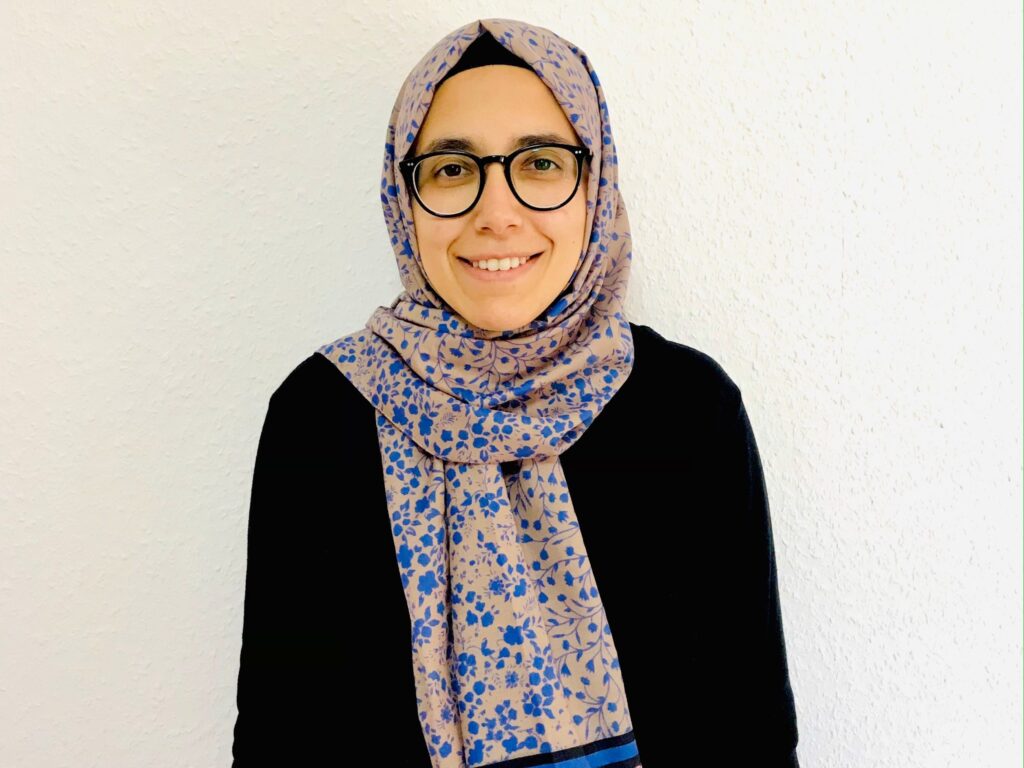
Kübra Özcan studied Islamic theology in Konya/Turkey and in Frankfurt at Goethe University before spending two semesters abroad in Cairo to deepen her knowledge of Arabic. She then completed a master’s degree in Religious Studies, specialising in Christianity. She also worked as a student assistant at the “Academy for Islam in Science and Society” (AIWG) for around two years. In her Master’s thesis, Kübra Özcan dealt with the image of God in the Old Testament and the concept of ẖalīfa in the Koran. In her doctoral thesis, she is working on the topic of “Islamic revelation in the context of comparative Christian studies”.
Antonia Sophie Steins
Antonia Sophie Steins studied Philosophy, Economics and Philosophy of Religion in Frankfurt am Main. Alongside her studies, she worked as a tutor and teaching assistant at the Institute of Philosophy and was involved in two self-organised student cafés on campus and as a student representative in the philosophy student council. Her doctorate, funded by the Hanns-Seidel-Foundation, is dedicated to the relationship between Jewish and Christian concepts of “enlightened religion” in German-speaking countries during the 19th century. The aim of the project is to explore the extent to which the various contributions to this subject opened up possibilities for thinking about religious difference with equal rights and where the path to a sufficiently broad understanding of religious equality was obstructed.


Jessica Ströer, B.A.
Jessica Ströer studied history, German, economics and art at Friedrich-Alexander University and graduated with a Bachelor of Education. Before her current position, she worked at the Department of Economics. She also took part in the “Lern: Förderung” project, a cooperation project between the Dr Ursula Schmid-Kayser Foundation of the Förderverein Pädagogische Initiativen in Metropolregion Nürnberg e.V. (FPI) and the Centre for Teacher Training at FAU Erlangen-Nuremberg (ZfL). In this project, she supported disadvantaged children and young people at secondary schools in their individual learning progress. She is currently working on the #WissenMachtStark project. Her area of responsibility at BaFID primarily included content creation and social media management.
Kirsten Waltert, M.A.
Kirsten Waltert studied English Literature and Linguistics, Romance Studies and Communication Studies in Bamberg and in St. Catharines, Canada. After completing her master’s degree and various internships in the media industry, she completed a traineeship before working for many years in various roles as a daily newspaper editor, including author, editor and project coordinator. She specialises in research and science. During a one-year study visit to the Middle East, she learnt Hebrew and Arabic at FAU. At BaFID, she worked as a consultant for media and public relations and as a team coordinator; she is currently doing her doctorate at FAU and works as a lecturer.